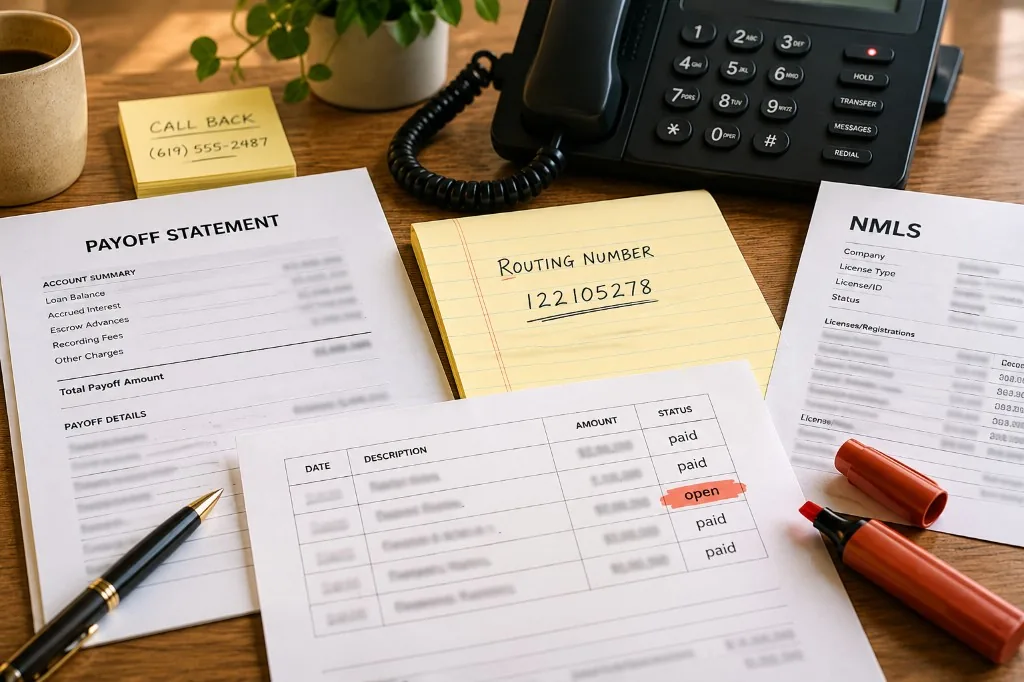

A DFPI examination letter arrives, and suddenly you're wondering whether your files will hold up under scrutiny. The examiner isn't coming to review your paperwork. They're coming to test whether your controls actually work.
This guide covers what examiners verify before they arrive, how they test your trust account reconciliations and disbursement controls, the most common findings in single-branch offices, and how to prepare files that survive examination.
What a DFPI single-branch escrow examination covers
DFPI examiners audit single-branch escrow offices to verify financial stability, compliance with California's Escrow Law, and proper handling of trust funds. The examination focuses on three-way account reconciliations, file organization, trust shortages, and dormant fund handling. Examiners also confirm that the office meets bond, liquid net worth, and tangible net worth thresholds.
Think of the examination as a controls test, not a paperwork review. Examiners want to know whether funds are where they belong, whether your files support the disbursements you made, and whether your office actually follows the procedures it claims to follow.
Records and reports examiners verify before arrival
Before the on-site visit, examiners review what you've already filed with the DFPI. If any of the baseline filings are late or missing, the examination starts with a deficiency before the examiner walks through your door.
### Audited financial statements filed within 105 days
California Financial Code requires every escrow agent to submit an audited financial statement within 105 days of fiscal year end. Examiners check whether the CPA opinion is unqualified and whether the filing was timely. A qualified opinion or late filing raises questions before the examination even begins.
### Report of Escrow Liability for the licensed location
The Report of Escrow Liability, due February 15 each year, shows total trust fund balances held at your licensed location. Single-branch offices file one report. Examiners compare the reported figure against your actual trust account balances at examination time.
### Bond and net worth documentation
Examiners verify that your surety bond amount matches or exceeds your escrow liability. They also confirm that your liquid net worth (cash and near-cash assets) and tangible net worth (total assets minus intangibles) meet statutory minimums. If liability has increased since your last bond adjustment, expect questions.
### Prior examination report and response letters
If your office had a previous examination, examiners review any cited deficiencies, your written response, and evidence of corrective action. Unresolved findings from prior examinations receive extra scrutiny. The response you wrote two years ago is part of your permanent record.
Trust account books and three-way reconciliation review
The three-way reconciliation is the central focus of most examinations. A three-way reconciliation ties together your bank statement balance, check register (also called the disbursement journal), and individual escrow ledger cards. All three figures have to match.
Examiners test whether reconciliations are current and whether discrepancies were resolved. "Current" typically means within 30 days of the examination date. They also look at how long reconciling items have been outstanding, with anything over 60 days drawing attention.
- **Bank statement balance:** Ties to the reconciled balance
- **Check register:** Lists every check issued
- **Individual escrow ledger cards:** Sum to the control total
- **Outstanding checks:** Itemized and aged, with explanation for anything over 60 days
Bond, liquid net worth, and tangible net worth thresholds
Your surety bond amount is tied to your escrow liability. As liability increases, so does the required bond. Examiners verify that your bond certificate reflects current liability levels at the time of examination.
Liquid net worth refers to cash and assets convertible to cash quickly. Tangible net worth is total assets minus intangible items like goodwill. Both have statutory minimums under California Financial Code.
| Requirement | What examiners check | |-------------|---------------------| | Surety bond | Matches or exceeds escrow liability | | Liquid net worth | Meets statutory minimum | | Tangible net worth | Meets statutory minimum |
File organization standards under DFPI EL-314
DFPI Form EL-314 is the official guidance for escrow record-keeping. Examiners use EL-314 as the baseline for file organization. If your files don't follow EL-314, expect findings.
### Numerical file sequencing and index
Files are numbered consecutively. Your office maintains an index showing file number, parties, property address, and status. Gaps in numbering require explanation. The index is how examiners select files for review.
### Required documents in every escrow file
Each file is self-contained. Examiners expect to find:
- **Escrow instructions:** Signed originals or executed copies
- **Amendments:** Any changes to original instructions, with signatures
- **Receipts:** Deposit slips, wire confirmations, incoming funds evidence
- **Disbursements:** Check copies, wire transfer records, payoff confirmations
- **Closing statements:** Final accounting of all funds
### Journal, ledger, and cash receipts records
Examiners verify that your general journal, escrow trust ledger, and cash receipts journal are maintained and current. The records tie to the three-way reconciliation. If the reconciliation doesn't match, examiners trace the discrepancy through the journals.
### Retention and off-site storage
California requires escrow records to be retained for five years after file closure. If files are stored off-site, they have to be retrievable within a reasonable time for examination. "Reasonable" typically means same-day or next-day access.
Disbursement and wire transfer controls examiners test
Disbursement controls are where examiners find the most deficiencies. The question is simple: what evidence existed in the file before funds left the trust account?
### Payoff demand verification and callbacks
Examiners check whether payoff demands were verified through independent callback to the lender. The file shows who called, when they called, and the number used. A payoff demand alone, without verification, is a finding waiting to happen.
### Seller proceeds release approval
The file shows that proceeds were released only after all conditions in the escrow instructions were met. Approval by an authorized party is documented in the file, not assumed from the fact that the wire went out.
### Dual signature and positive pay evidence
For offices using dual-signature requirements or positive pay with their bank, examiners verify that the controls are followed consistently. Inconsistent application is itself a deficiency. If your policy says dual signature, every disbursement over the threshold has two signatures.
### Segregation of duties in a single-branch office
Full segregation is often impractical in a small office. Examiners look for compensating controls: owner review, callback logs, secondary verification. The point is that no single person can initiate and complete a disbursement without oversight.
How to prepare your files for a single-branch DFPI audit
Preparation is straightforward if you treat it as ongoing practice rather than a pre-audit scramble.
### Step 1: Run a current three-way reconciliation on every trust account
Reconciliation is completed through the most recent month. If you're behind, catch up before the examiner arrives. A reconciliation dated three months ago signals that the office doesn't reconcile regularly.
### Step 2: Reconcile outstanding checks and document voids
Outstanding checks over 90 days require explanation. Voided checks are accounted for with notation. Examiners look for patterns that suggest control weaknesses, like a high volume of voids or checks outstanding for extended periods.
### Step 3: Pull a sample of closed files and verify contents against EL-314
Self-audit by pulling recent closed files. Check that all required documents are present and organized. This is exactly what the examiner will do, so you might as well find the gaps first.
### Step 4: Confirm the 105-day audit report and Report of Escrow Liability are filed
Verify filing dates and retain confirmation of submission. If either was late, prepare an explanation for the examiner. Late filings are deficiencies, but a clear explanation is better than silence.
### Step 5: Update written procedures and wire verification logs
Written office procedures reflect actual practice. Wire logs show callback verification for every outgoing wire. If your procedures say one thing and your files show another, that's a finding.
### Step 6: Assemble bond, net worth, and officer experience evidence
Have the following available for review: current bond certificate, recent financials showing net worth compliance, and documentation of officer experience. Examiners ask for all of it.
Common DFPI examination findings in single-branch offices
The same findings appear repeatedly across examinations. They're avoidable with consistent controls.
### Late or incomplete three-way reconciliations
This is the most common finding. Reconciliations that are months behind, incomplete, or not resolving discrepancies signal control weakness. The reconciliation is the foundation of trust account management.
### Disbursements without supporting evidence on file
Checks or wires issued without corresponding approval documentation, payoff confirmation, or instruction authorization in the file. The disbursement happened, but the file doesn't show why it was authorized.
### Stale payoff figures and unverified wire instructions
Using payoff demands past their validity date or wiring to instructions that were not independently verified. Offices that track what they relied on before acting, and automatically hold releases when evidence goes stale, avoid this finding.
### Missing owner approval on material changes
Changes to disbursement amounts or recipients without documented owner or manager approval. Single-branch offices often lack formal exception processes, which makes this finding common.
Responding to the Report of Examination
After the examination concludes, your office receives a Report of Examination listing findings. You respond in writing: acknowledge findings, describe corrective action, and provide a timeline.
The response becomes part of your permanent record. Future examiners review it. A thorough response that shows actual corrective action is better than a defensive one that disputes findings without evidence.
Building a defensible review record for every release
Examination readiness is ongoing. Every covered disbursement produces a contemporaneous record of what the office reviewed before acting.
Controls that automatically hold releases on stale or unsupported records create the audit trail examiners expect to see. The file shows what you relied on, when you relied on it, and who approved it. That's the record that survives examination.
Frequently asked questions about DFPI single-branch escrow audits
### How often does the DFPI examine a single-branch escrow agent?
DFPI examinations occur periodically based on risk factors and time since last examination. There is no fixed annual schedule, though offices typically expect examination every few years.
### Can a DFPI examination happen without prior notice?
DFPI has authority to conduct examinations with or without advance notice. Most examinations are scheduled in advance with a formal notification letter, but unannounced examinations are permitted under California Financial Code.
### How long do California escrow offices retain files and trust account records?
California Financial Code requires retention for five years after file closure. The requirement applies to both paper and electronic records.
### Are electronic escrow files acceptable during a DFPI examination?
Electronic records are acceptable if they meet the same content and organization standards as paper files and can be produced for examiner review. The DFPI's March 2009 Escrow Bulletin addresses electronic storage requirements.
### Who is authorized to sign the Report of Escrow Liability for a single-branch office?
The Report of Escrow Liability is signed by an officer or principal of the licensed escrow company who has knowledge of the trust account balances.
This article describes examination, operational, and documentation practices for independent escrow offices. It is not legal advice and does not classify any office as compliant or noncompliant with DFPI requirements, ALTA Best Practices, or E&O carrier expectations. Veto does not verify, approve, certify, guarantee, insure, authorize, detect fraud, prevent fraud, or make wires safe to send. Veto records the review, captures the source and limitation of each check, marks records stale on material changes, holds releases on stale records, and logs the audit trail. The office decides. Veto records the review.