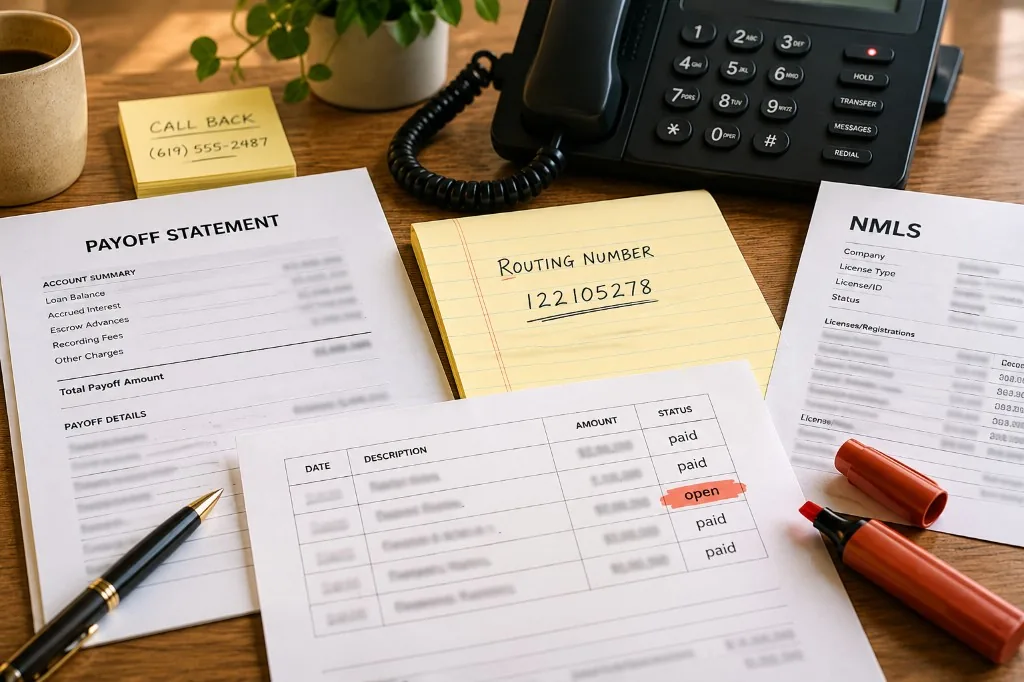

Examiners don't flag escrow offices for having problems. They flag offices for not knowing about them, or worse, for knowing and not documenting the resolution.
Trust account reconciliation is where that knowledge lives. This article covers the specific mistakes that trigger examiner flags, the records DFPI examiners request, and the step-by-step process for a compliant three-way reconciliation.
What three-way trust account reconciliation means for independent escrow
Trust account reconciliation for independent escrow requires a perfect balance between three elements: the bank statement balance, the book balance, and the sum of all individual file ledger balances. Examiners check whether all three figures match exactly. A mismatch, even a small one, triggers a flag.
Independent escrow companies face distinct scrutiny compared to attorney IOLTA accounts or title company trust accounts. California's Department of Financial Protection and Innovation (DFPI) examines independent escrow licensees directly, and the Escrow Agents Fidelity Corporation (EAFC) monitors for shortages.
Here's how the three components break down:
- **Bank statement balance:** The ending balance reported by your depository institution, adjusted for outstanding checks and deposits in transit.
- **Book balance:** Your internal record of all trust account activity, including every receipt and disbursement.
- **Sum of file ledgers:** The total of all individual escrow file balances, representing what you owe to each file.
When all three match, you have a clean reconciliation. When they don't, you have a variance to investigate.
When independent escrows reconcile trust accounts
California requires daily posting of all receipts and disbursements. Every deposit and every check gets recorded on the day it occurs. This daily discipline creates what's called a "cash position," meaning you can state, at any moment, how much is in the trust account and whether it covers all file obligations.
Monthly three-way reconciliation is the minimum. Most offices complete this by the 10th or 15th of the following month. Examiners check not just whether the reconciliation was performed, but whether it was dated, signed by the preparer, and reviewed by someone with authority.
A reconciliation that sits in a software queue, unsigned, is incomplete.
California DFPI and EAFC reconciliation rules that define examiner flags
DFPI examiners arrive with a checklist. They request reconciliation workpapers (not just software reports), bank statements, file ledgers, and documentation for any manual adjustments. They look for evidence of monthly reconciliation, shortage reporting, segregation of duties, and proper disbursement authorization.
EAFC, the fidelity fund for California independent escrow companies, requires shortage reporting. A "shortage" in escrow terms means the sum of file ledger balances exceeds the available trust account funds. If you have $500,000 in file obligations but only $495,000 in the bank, you have a $5,000 shortage.
Unreported shortages are a flaggable offense, and EAFC expects prompt notification.
Common mistakes that trigger examiner flags
### 1. Commingling trust and operating funds
Commingling occurs when earned fees stay in the trust account or when operating expenses are paid from trust funds. Even a small "cushion" left in the account can be flagged. The fix is straightforward: move earned funds to operating promptly and never use trust funds for non-escrow purposes.
### 2. Disbursing against uncollected funds
California's good-funds requirement means you can only disburse after funds are collected, not just deposited. A wire received today is collected. A check deposited today is not.
Examiners flag offices that release based on deposit slips rather than cleared balances.
### 3. Negative individual file balances
A negative file balance means you've disbursed more than you received on that specific file. This is always a flag, even if the overall trust account shows a positive balance. You're effectively using one client's money to fund another client's transaction.
### 4. Stale outstanding checks and uncleared deposits
Checks outstanding beyond 90 days, or deposits that never clear, signal a recordkeeping problem. Examiners view large numbers of stale items as potential float abuse or forgotten obligations.
Investigate and resolve outstanding items monthly.
### 5. Treating a software report as a three-way reconciliation
Your escrow software can generate a report. That report is not a reconciliation by itself. Reconciliation requires human review, investigation of variances, and documented sign-off.
Examiners flag offices that print reports but never document the review or resolution of differences.
### 6. Manual journal entries without source documentation
Manual adjustments to the ledger, such as correcting a data entry error, require supporting documentation. An entry with no explanation or backup is a flag.
Every manual entry requires documented approval and a clear reason.
### 7. Releasing wires without posted ledger support
A wire sent before the ledger reflects the transaction, or before the file ledger shows sufficient funds, creates a control gap. The reconciliation will show a variance.
Examiners flag this as a process failure.
### 8. Reconciler and wire authorizer held by the same person
Segregation of duties means the person who reconciles the account is not the same person who authorizes disbursements. Single-person control is a fraud risk.
Assign reconciliation and wire authorization to different staff, or require dual approval.
Red flags examiners open files on
Beyond individual mistakes, examiners look for patterns that suggest deeper problems:
- Repeated shortages across multiple months
- Unexplained variances carried forward without resolution
- Missing or incomplete reconciliation workpapers
- Frequent manual adjustments with no supporting records
- Evidence of disbursements before deposit clearance
Any of these patterns can escalate a routine examination into a formal review.
Records and documentation examiners request during review
Examiners expect you to produce the following on demand:
- Monthly reconciliation workpapers (not just software reports)
- Bank statements and deposit/disbursement records
- Individual file ledgers
- Manual journal entry logs with supporting documentation
- Wire authorization records and sign-offs
- Exception logs (if any policy bypasses occurred)
If you can't produce a document, the examiner assumes it doesn't exist.
How to perform a three-way reconciliation step by step
### Step 1. Reconcile the bank statement to the book balance
Start with the bank statement ending balance. Subtract outstanding checks. Add deposits in transit. The result is your adjusted bank balance, which matches your book balance if your records are accurate.
### Step 2. Reconcile the book balance to the sum of file ledgers
Add up all individual file ledger balances. The total equals the book balance. If it doesn't, you have a variance to investigate.
### Step 3. Verify each individual file ledger
Review each file ledger for negative balances, stale items, or unexplained entries. Flag any file where the ledger doesn't match expected activity.
### Step 4. Match outstanding items to source documents
For every outstanding check or deposit in transit, locate the source document: check image, wire confirmation, or deposit slip. Unmatched items require investigation.
### Step 5. Record the reviewer, sign-off, and retention
Document who performed the reconciliation, who reviewed it, and when. Retain the workpapers per office policy and regulatory requirement. This is the step examiners verify first.
How to investigate and resolve a reconciliation variance
Variances have common causes:
- **Data entry errors:** Transposed digits, wrong file number, duplicate entries
- **Timing differences:** Deposits or checks recorded in different periods by bank and office
- **Unrecorded bank fees:** Service charges, wire fees, or returned item fees not posted to the ledger
- **Bank errors:** Rare, but possible; require bank confirmation and documentation
Unresolved variances require documentation, escalation to management, and reporting if they indicate a shortage. Hiding or carrying forward unexplained variances is a flaggable offense.
Why wire releases create reconciliation flags after the fact
Wire releases move funds instantly. Ledger posting and reconciliation often lag. If a wire is sent without a posted ledger entry, or before funds are collected, the reconciliation will show a shortage or variance.
This is a control gap that examiners flag. A control layer that holds releases on stale or unsupported records makes the problem visible before the wire is sent, not after. For the broader control-layer doctrine, see Preventing wire fraud in escrow offices using automated control layers.
Veto's Review Record documents what the office relied on before releasing funds, creating a reconstructable audit trail.
Monthly reconciliation checklist for independent escrow
| Task | Status | |------|--------| | Bank statement received and reviewed | ☐ | | All deposits and disbursements posted to ledger | ☐ | | Outstanding checks and deposits in transit identified | ☐ | | Adjusted bank balance calculated | ☐ | | Book balance matches adjusted bank balance | ☐ | | Sum of file ledgers matches book balance | ☐ | | Each file ledger reviewed for negative balances or stale items | ☐ | | Variances investigated and documented | ☐ | | Reconciliation signed and dated by preparer and reviewer | ☐ | | Workpapers retained per policy | ☐ |
Run a live-file control test before the next examiner visit
You can test your controls before an exam by running a live-file control test. Veto's Review Record documents what the office relied on before releasing funds, making the audit trail visible and reconstructable.
Frequently asked questions about trust account reconciliation for independent escrow
### How often must an independent escrow trust account be reconciled under California law?
Independent escrow companies reconcile trust accounts monthly, with daily posting of all receipts and disbursements required to maintain an accurate cash position.
### What is the difference between a two-way and a three-way reconciliation?
A two-way reconciliation matches only the bank statement to the book balance. A three-way reconciliation adds a third match: the sum of all individual file ledgers equals the book balance.
### What counts as a reportable shortage under DFPI and EAFC rules?
A reportable shortage occurs when the sum of file ledger balances exceeds the available trust account funds. Independent escrows report such shortages to EAFC promptly.
### Can escrow accounting software produce a compliant three-way reconciliation without manual review?
Software generates reports. A compliant reconciliation requires human review, investigation of variances, and documented sign-off by a reviewer.
### What should an escrow office do if a reconciliation variance cannot be resolved?
Unresolved variances require documentation, escalation to management, and reporting if they indicate a shortage. Hiding or carrying forward unexplained variances is a flaggable offense.
This article describes examination, operational, and documentation practices for independent escrow offices. It is not legal advice and does not classify any office as compliant or noncompliant with DFPI requirements, ALTA Best Practices, or E&O carrier expectations. Veto does not verify, approve, certify, guarantee, insure, authorize, detect fraud, prevent fraud, or make wires safe to send. Veto records the review, captures the source and limitation of each check, marks records stale on material changes, holds releases on stale records, and logs the audit trail. The office decides. Veto records the review.